LA County High Road Training Partnerships
Build a High Road Future and Economy
LA County’s High Road Training Partnerships (HRTPs) connect local jobseekers to paid training, real work experience, and direct pathways to good-paying jobs and businesses to a qualified talent pool, at no cost.
Start Your Journey Today
Many LA County residents have already used HRTP programs to gain skills, secure jobs, and build stability for themselves and their families.
Explore available training programs and apply today.
What To Expect
Why Sign Up?
Earn & Learn
For most training programs, workers are paid stipends or wages while gaining in-demand skills, so they can focus on their future without putting life on hold.
Real Jobs & Careers
HRTP programs are built with employers, unions, and other worker representing organizations, and industry partners to prepare participants for careers in growing fields like healthcare, construction, clean energy, technology, public service, and more.
Support Beyond the Classroom
Participants receive career coaching, job placement assistance, and supportive services, such as transportation vouchers, childcare, and tools needed to succeed. Some programs also offer training stipends or wages for participants so they can focus on their future without putting life on hold.
Opportunities for Everyone
HRTPs prioritize people who have faced barriers to employment, including people impacted by economic hardship, system involvement, housing instability, or limited access to traditional education.
HRTPs by the Numbers
Data updated January 2, 2026
Invested
HRTPs
HRTP Organizational Partners
Participants Enrolled
Successful Graduates
Total Hires
Apprentices
Employers Who Have Hired
Eligibility
All HRTP programs are completely free for eligible participants – No cost to you!
LA County Residents
Residents of Los Angeles County are eligible to apply
Program Requirements
Each program has its own eligibility requirements and application process. Applicants may be asked to complete an intake or assessment and provide required documentation, including at least one form of identification and proof of Los Angeles County residency.
Priority Populations
Job seekers who face employment barriers like experiencing homelessness, involvement with the justice system, and foster care system, including those who have low income, are encouraged to apply.
General Eligibility Includes:
Meeting minimum age requirements (some programs accept participants starting at age 16; others require applicants to be 18 or older)
Interest in the industry or occupation the program focuses on
Ability to attend an intake session and commit to the full training schedule, as outlined by the training provider
Worker Equity Fund
All HRTP participants are eligible to receive up to $1,500 in emergency cash aid through the Worker Equity Fund to overcome barriers that would otherwise prevent them from completing training and embarking on their new career.
Explore Industry Training Programs
Select an industry to view available training programs

Aerospace & Defense
LA County’s aerospace and defense sector faces a shortage of Industrial Machinery Mechanics, with one third of the workforce expected to retire within five years and demand projected to rise by 17% by 2032. Training pipelines are not keeping pace, leaving employers with prolonged vacancies and high costs, while under-resourced workers face barriers to accessing training.
As the industry expands and a portion of the current workforce nears retirement, job openings are increasing faster than local training programs can fill them. This has left employers with long-standing vacancies and higher hiring costs, while many young people and under-resourced workers in the region remain disconnected from the training and support needed to access these careers. Strengthening a local talent pipeline can help meet employer needs while opening real pathways to stable jobs for community leaders.
Lost Angels Aerospace Training
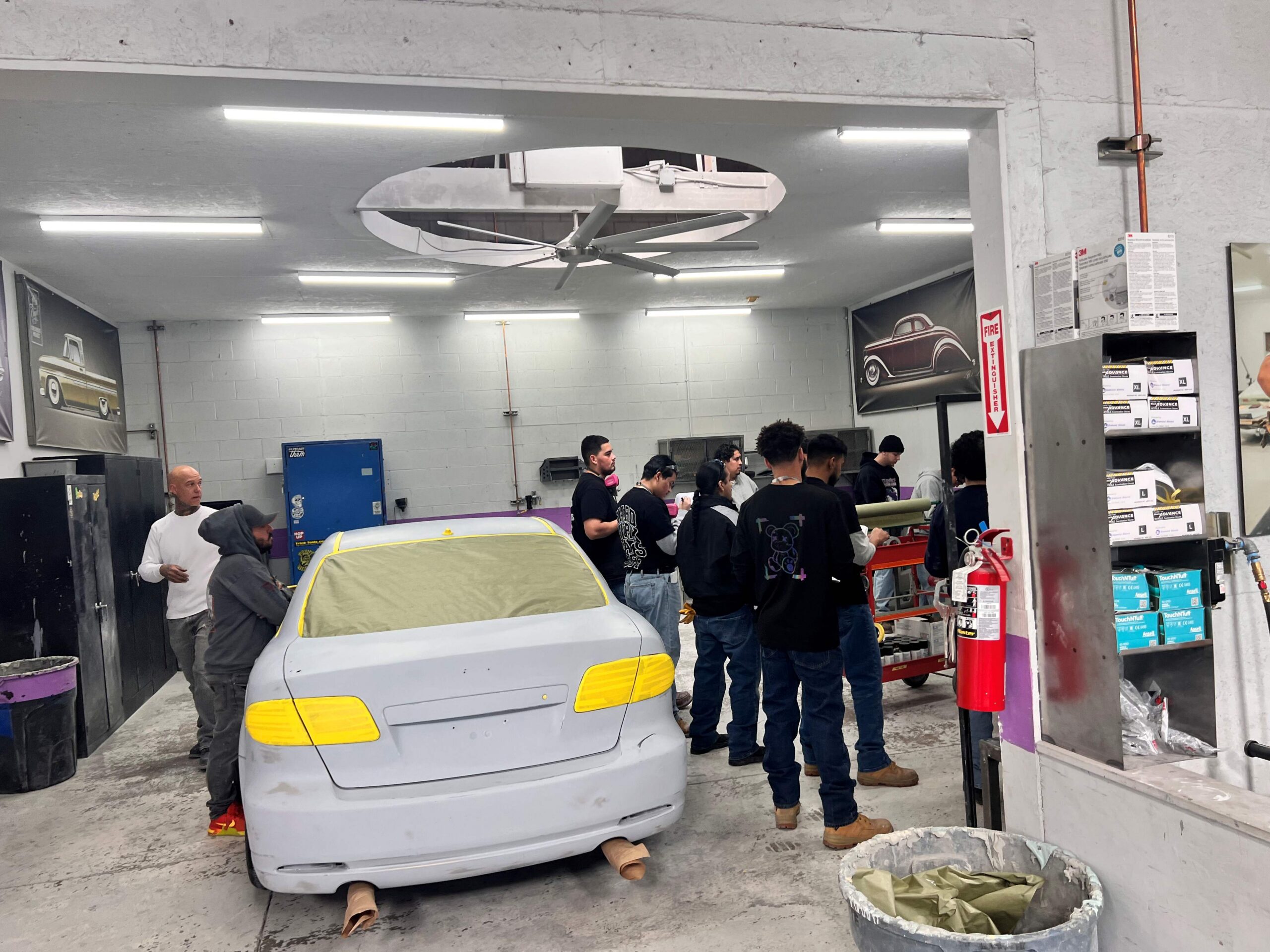
This 12-week training program prepares young adults for careers in aerospace by building practical, in-demand skills. Participants gain hands-on experience in welding, blueprint reading, auto painting, and engine assembly. Training takes place 19 hours per week, with participants earning $18 per hour while they learn. Graduates earn industry-recognized certifications, including forklift operations, OSHA 40, HAZMAT, and CPR.
New cohorts are not currently funded by the LA County Department of Economic Opportunity.
Partners: Lost Angels Career Center (Lead), Training Funding Partners, Antelope Valley AJCC, Northrop Grumman, Lockheed Martin, Stratolaunch, General Atomics, Woodward, MS Aerospace, AS Aerospace, Spin Garage, ITT
Aerospace and Defense Manufacturing
This 32-week pre-apprenticeship program prepares participants for careers as industrial machinery mechanics. Participants receive cash stipends every 2 weeks, along with supportive services like childcare and transportation assistance, while completing 684 hours of classroom instruction and 54 hours of paid on-the-job training. Graduates earn a 29-unit Certificate of Achievement in Automation from Rio Hondo College, with technical training in Programmable Logic Controller (PLC) diagnostics, robotics, fluid systems, and predictive maintenance. LISI Aerospace provides employer-based projects, mentorship, and gives program graduates first consideration for jobs, with starting wages of $33/hour.
All cohorts are currently full and underway.
Partners: Rio Hondo College (Lead), Rio Hondo America’s Job Center of California, LISI Aerospace

Construction & Infrastructure
LA County’s construction and green economy are growing rapidly, driven by climate resilience needs, clean energy goals, and the transition to 100% clean electricity by 2045. From wildfire recovery and infrastructure upgrades to solar, sustainable construction, storm water management, and climate-smart landscaping, these efforts depend on a skilled workforce ready to strengthen communities.
Demand is expected to rise further as the region prepares for the 2026 FIFA World Cup and the Los Angeles 2028 Olympic and Paralympic Games, bringing major construction and infrastructure investments. Yet many people most impacted by climate change and economic disruption, especially opportunity youth, justice-impacted individuals, and residents from historically underserved communities, still face barriers to entering these careers. Expanding inclusive, industry-aligned training pathways is essential to meeting workforce needs while creating access to stable, living-wage jobs across the county.
Green Futures LA
Antelope Valley applications due 3/6/26
Green Futures LA with Get Focused Stay Focused supports opportunity youth and young adults in launching careers in high-growth green industries through a pre-apprenticeship–style pathway designed to lead to Registered Apprenticeship Programs or quality jobs, such as solar panel installers, EV Station Technician, Landscaping and Groundskeeping Workers, Water And Wastewater Treatment Plant and System Operators. The program begins with an 8-week Pathway to Careers™ Academy (80 hours) focused on career readiness and foundational skills. Participants earn industry-recognized credentials, including Occupational Safety and Health Administration (OSHA) 10, National Fire Protection Association (NFPA) 70E (Electrical Safety), Lockout/Tagout (LOTO), and SAE International Electrical Vehicle Supply Equipment (EVSE) certification for electric vehicle charging infrastructure. Qualified participants then move in up to 320 hours of paid, structured work experience, gaining real-world exposure to green career pathways, and building the skills needed for long-term advancement.
Partners: The Get Focused Stay Focused Nonprofit (GFSF) (Lead), Clover Agency, Gaia Utility 360, SmarterHelp, Kandula Communications, Tech Exchange, LA Black Workers Center, NextGen Policy, Anti-Recidivism Coalition, EntreNous Community Empowerment, Valley Industry Association, EDD - America's Job Center of California (Rancho Dominguez AJCC), Project Joy.
Installation Basics Training
GRID Alternatives Greater Los Angeles (GLA) offers a 13-week paid training program that opens doors to careers in the growing clean energy sector, with a focus on supporting individuals from underserved and frontline communities. Participants complete a 300-hour Installation Basics Training (IBT 200) program that blends classroom learning with hands-on experience installing solar photovoltaic (PV) systems on real-world projects. The program builds practical, job-ready skills while helping participants earn more than 13 industry-recognized certifications, including electrical safety, wiring, system layout, mounting, and installation. Beyond technical training, the program provides jobs through direct connections with employers and apprenticeships that lead to long-term career pathways in renewable energy and related green industries in occupations including solar panel installers, smart home energy technicians, low voltage technicians, and electrical helpers. This training is designed to support stable employment, career growth, and a meaningful role in building a cleaner, more resilient future.
Partners: GRID Alternatives (Lead), Altadena Solar, Energy Pro, Prime Energy, San Gabriel Valley Habitat for Humanity, REDF, LeadersUp, Dena Rebuild and Restore, and 10+ organizational partners
MC3 Pre-Apprenticeship
The Apprenticeship Readiness Fund offers a 10-week Registered Pre-Apprenticeship Program designed to help participants take their first steps into a union apprenticeship and a long-term career in construction. Trainees complete 120 hours of hands-on, industry-approved training that builds real skills employers require. The program combines practical instruction, physical conditioning, and essential trade knowledge using the nationally recognized Multi-Craft Core Curriculum (MC3). Participants graduate confidently, prepared, and job ready. By the end of the program, trainees will earn their MC3 certification; Occupational Safety and Health Administration (OSHA) 10 safety certification; and CPR and First Aid certifications. In addition, trainees will access Registered Apprenticeship Program pathways with the Los Angeles and Orange County Building Trades.
New cohorts are not currently funded by the LA County Department of Economic Opportunity.
All LA County DEO-funded cohorts are currently full and underway.
Partners: Apprenticeship Readiness Fund (Lead), Los Angeles/Orange County Building and Construction Trades Council, MC3 training providers, and 55+ employers
Paid Training Pathways to Union Careers in Landscaping and Construction
This 8-week Pre-Apprenticeship Program supports justice-impacted individuals in building stable careers while preparing workers for in-demand landscaping and construction jobs, such as general construction laborers, grounds maintenance workers, and landscaping construction technicians. Participants receive hands-on training in climate-resilient skills, such as irrigation systems, sustainable maintenance, concrete and asphalt removal, deconstruction, and wildfire debris recovery. Graduates are sponsored into union-track careers with United Association (UA) Local 345 or Laborers International Union of North America (LiUNA) Local 300, opening doors to long-term jobs with strong wages and benefits. The program begins with a paid 2 to 3-day orientation through Center for Employment Opportunities (CEO LA), followed by paid transitional work and support applying to the Careers for Change HRTP, creating a clear, supported path from training to union employment.
Partners: Center for Employment Opportunities (CEO LA) (lead), SLA Inc., LIUNA Local 300, UA Local 345, RJ Demolition, Ramirez Nursery, West Coast Arborists
BRIDGES LA
This program prepares participants for in-demand construction careers through hands-on training in sustainable construction practices. Participants begin with a Construction Career Academy, designed to build confidence, job readiness, and foundational skills. Each training track starts with a Career Exploration Bootcamp, where participants develop essential workplace and business skills before advancing into hybrid, industry-aligned training. Throughout the program, participants receive stipends, case management, and job placement support, with clear pathways into union apprenticeships or living-wage jobs, such as green builder, CALGreen Compliance Specialist, OSHA-Certified Saftey Technician, Weatherization Technician, providing real opportunities for stability, advancement, and long-term success.
All cohorts are currently full and underway.
Partners: Los Angeles Urban League (Lead), SKARNETT, Southern California Edison, Western States Regional Council of Carpenters, Zella Life, ProSearch, Intelligent Partnership, JT Mitchell Academy, West LA College (LACCD); Fernandeño Tataviam Band of Mission Indians
SMART Training
Over the course of an apprenticeship year, participants complete both classroom instruction and 800 hours of on-the-job training. Participants are enrolled in decarbonization and energy-efficiency tracks that prepare them to earn certifications aligned with California’s Title 24 building energy efficiency standards. Sheet metal participants complete 150 hours of classroom training and prepare for certifications such as TAB Technician, Mechanical Acceptance Technician, and Supervisor. Electrical participants complete 280 hours of classroom training in areas like solar integration and prepare for ESAMTAC, CALCTP, and EVITP certifications. Graduates are supported with job placement into union pathways and long-term advancement opportunities in the clean energy sector, such as sheet metal workers, HVAC technicians, and electricians
All cohorts are currently full and underway.
Partners: Western States Council of SMART (Lead), ETI, SMART Local 105, LAANE, SoCal Sheet Metal JATC, IBEW Local 11, SMACNA, NECA

Creative Economy
LA County is a global center for creative and digital media, supporting a $447 billion industry and helping power nearly 15% of California’s economy. Yet many local residents are still locked out of these careers. Nearly 144,000 young people across LA County are disconnected from both school and work, limiting their access to creative job pathways.
Training and hiring systems have not kept pace with industry growth. Over the past two decades, much of animation production has moved overseas, reducing local entry-level jobs and weakening training pipelines. At the same time, people who are system-impacted or neurodivergent, especially autistic adults, remain largely excluded, with national unemployment rates exceeding 80%, despite strong alignment with creative and technical roles.
These gaps mean too much local talent is being left behind, and the region risks losing its competitive edge as a global creative hub. Expanding inclusive, industry-aligned pathways from training to employment is essential so more residents can access good creative jobs and build long-term economic stability.
Soundworks
Next Cohort Start Date: February 11, 2026
10-week program for transitional-aged youth in live sound, lighting, and video production with integrated wellness support. 200 hours classroom training plus 80 hours paid hands-on experience as Audio/Video Technicians and Camera Operators. Earn Adobe Premiere Pro and AVID Pro Tools certifications.
Partners: White Hall Arts Academy Foundation (Lead), Solotech, The Right Way Foundation, the Miracle Theater, Ashanti United Church of Christ
Workforce Innovation Network (WIN)
Next Cohort Start Date: April 6, 2026
Through WIN, New Earth prepares young adults each year for careers in audio engineering through a paid, hands-on training pathway. Participants receive a modest stipend of $900 during an 8-week training phase that includes 160 hours of technical instruction and career readiness support. Graduates then advance to up to 200 hours of paid, on-the-job training for a duration of up to 200 hours, working on real-world production projects with employer partner Codega Media. This pathway leads to in-demand roles, such as sound engineering technician roles, which pay an average of $40.70/hour in LA County.
Partners: New Earth (Lead), Codega Media, Bonfire, Hunnibuzz, FLOW Studio, LA County Department of Youth Development, Latino Coalition for Community Leadership, Jewish Vocational Services, Amity Foundation, Didi Hirsch Mental Health Services, NPower, and YouthBuild.
Arts, Media, and Entertainment (AME) Pathways
The Arts, Media, and Entertainment (AME) Pathways program expands access to high-skill, high-wage careers in LA County’s creative economy for underrepresented workers. Through Pre and Apprenticeship Programs and on-the-job training lasting from 8 weeks to one year, participants receive paid training, stipends, mentorship, and career coaching across sectors such as Film and Television, Music and Audio, Live Events, and Digital Media. Delivered in partnership with employer partners, labor unions, and Registered Apprenticeship Program Sponsors, the program strengthens workforce pipelines and advances economic mobility in California’s creative industries.
All cohorts are currently full and underway.
Partners: South Bay Workforce Investment Board (Lead), Break, Reinvent, Impact, and Change (BRIC) Foundation (Lead), Better Youth, Coalition of Festivals, Local 80, GRX, Handy Foundation, Local 728, Local 600, EVEN, Group Effort Initiative, over 30 employers in the entertainment industry
The Rain Man Initiative
This trauma-informed animation training program is designed to support autistic and neurodivergent adults in launching and growing careers in animation. Through paid internships, professional mentorship, and inclusive studio production, participants gain the skills and experience needed to succeed as Animation Artists. This 12-month program runs from October 2025 through June 26, 2026. Participants take part in a fully remote, project-based learning experience that mirrors real studio workflows and uses industry-standard tools. The program includes 288 hours of virtual classroom instruction and 480 hours of paid internship experience, supported by individualized coaching, assistive technology, award-winning industry mentors, and peer mentorship. Participants progress through studio-aligned training modules and graduate with two credentials: a Program Completion Certificate and the Toon Boom Associate Certification.
All cohorts are currently full and underway.
Partners: Worldwide Starship Foundation (Lead), Visual Arts Academy, Awesome Ants Studios, Quest Pacifica, KeyNote Studios, and IAC Industry Advisory Committee.
Venice Arts Pre-Apprenticeship
This 8-week paid Registered Pre-Apprenticeship Program offers hands-on training in digital editing and storytelling, helping participants turn creativity into real career skills. Through practical, project-based learning, participants gain industry experience while building technical expertise in professional editing tools. Graduates earn a Venice Arts Pre-Apprenticeship Certification and can pursue an Adobe Premiere Pro Certification, opening doors to entry-level roles in media and creative production, such as Production Assistants, Film & Video Editors, Audio & Video Equipment Technicians, and Editors.
All cohorts are currently full and underway.
Partners: Venice Arts

Early Care & Education
The early care and education (ECE) industry is facing a growing workforce shortage, yet at the same time demand from families has never been higher.
In LA County, there are more than 725,000 children under the age of five, yet licensed childcare centers and family childcare homes can currently only meet a small share of working families’ needs. According to the LA County Department of Public Health Office for the Advancement of Early Care and Education, just 7% of working parents’ childcare needs can be served through licensed care today.
This gap has real consequences. When families can’t find affordable, reliable childcare, it limits economic stability, especially for women and caregivers, and makes it harder for parents to work, pursue education, or advance their careers.
Assistant Teacher Apprenticeship Program
The Assistant Teacher Registered Apprenticeship Program offers a clear, supported pathway into a meaningful career in early care and education. Over 1.5 to 2 years, participants receive free community college education alongside paid, on-the-job training, making it possible to earn while learning. The program includes 180 hours of classroom instruction and 2,000 hours of paid work experience with partner employers, helping apprentices build real skills in real classrooms. Participants also take part in a Teacher Preparation Academy, which provides job readiness support, trauma-informed teaching practices, and ongoing professional development to prepare apprentices for success in today’s early learning environments.
At the end of the program, graduates earn the State Associate Teacher Permit, an important credential that opens doors to stable, in-demand jobs in early care and education, primarily as assistant teachers.
Partners: Los Angeles County Office of Education (Lead), Child Care Resource Center (Lead), Department of Public Health Office for the Advancement of Early Care and Education, Early Care and Education Pathways to Success, Pierce College, West LA College, College of the Canyons, Volunteers for America, Head Start

Healthcare and Social Assistance
Healthcare is one of the largest and fastest-growing industries in LA County, employing more than 473,000 workers and touching nearly every family and community. Yet hospitals, clinics, and care providers across the region are struggling to hire enough workers, especially in entry- and mid-level roles with living wages, benefits, career advancement pathways.
Essential positions such as Certified Nursing Assistants (CNA), Medical Assistants (MA), Sterile Processing Technicians (SPT), Substance Use Disorder (SUD) Counselors, Peer Support Specialists, Recovery Technicians, home care workers, and Case Managers are in high demand and provide stable, meaningful work. LA County alone expects more than 8,500 MA job openings annually through 2028, yet fewer than 4,000 people complete MA training each year, leaving a significant talent gap.
Many young people and jobseekers from historically underserved communities are eager to enter healthcare careers, but face real barriers, including high education costs, limited awareness of alternative training pathways, and lengthy certification and hiring processes that restrict access to good, union-protected jobs.
This shortage is widening. By 2028, California is projected to be short more than 500,000 allied health workers, even as demand for care grows. Frontline roles remain undervalued, with limited mobility and high burnout, despite their critical role in providing trauma-informed, culturally responsive care.
Still, the challenge presents a major opportunity: to build strong, local talent pipelines; improve job quality and wages; and create clear pathways into healthcare careers that support both workers and the communities they serve. With investment in training, advancement, and innovative models like employee ownership, LA County can strengthen its healthcare workforce while expanding access to stable, meaningful careers.
Bridge to Behavioral Health Careers: Empowering Talent with Lived Experience
Next Cohort Start Date: February 18, 2026 and March 23, 2026
This high-road behavioral health training program creates supported pathways into meaningful careers for people with lived experience. By combining peer-based learning, employer-informed training, and paid transitional employment, the program connects participants to roles that strengthen both personal stability and community well-being. The program prepares participants for careers as Peer Support Specialists through a 150-hour training model that blends hands-on experience with classroom learning. Training is delivered in two stages to support skill-building and long-term success. The first stage includes 70 hours of paid transitional work and training, where participants build core workplace skills and gain eligibility to continue into the full program. The second stage consists of 80 hours of classroom-based instruction, covering essential competencies such as conflict resolution, communication, and digital literacy.
Partners: REDF (Lead), Center for Living and Learning, Los Angeles LGBT Center, The Chrysalis Center, Painted Brain, Pacific Clinics, Pacific Clinics Training Institute, Didi Hirsch La Fuente Hollywood Treatment Center, Trailhead Strategies.
Caring Workforce Training Program
Next Cohort Start Date: March 21, 2026 and May 9, 2026
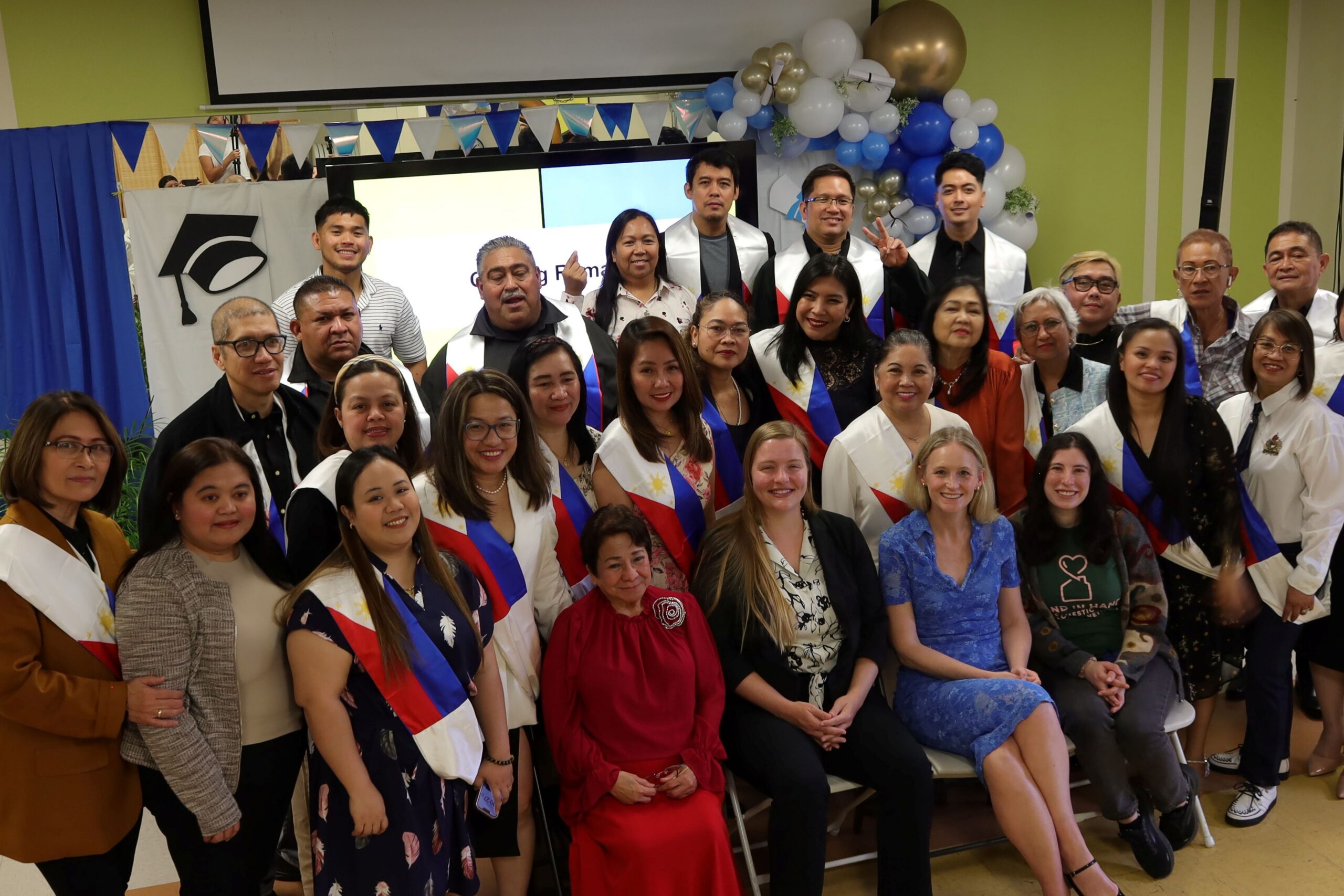
This Home Health Care training program – the Caring Workforce Training Program with the Pilipino Worker Center (PWC) - creates flexible, supported pathways into stable, higher-paying careers in the care economy, recognizing and building on participants’ different levels of experience. In Track 1, also known as Foundational Training, participants complete a 9-week paid training program that combines classroom instruction with hands-on, on-the-job learning. Participants earn an hourly wage of $22, receive California Home Care Aide registration, and gain access to higher wages and the opportunity to join a worker-owned cooperative, offering greater stability and shared ownership in the workplace. Participants with prior home care experience may enter Track 2 also known as Advanced Skills Training. This is a 5-week advanced training program focused on specialized skills such as dementia and Alzheimer’s care and preventing re-hospitalization. These in-demand skills prepare participants for higher-paying roles that require advanced expertise within the home healthcare sector. Together, both tracks offer high-impact entry points into the home care workforce, supporting career growth, fair wages, and long-term opportunities in an essential and growing industry.
Partners: Pilipino Workers Center (Lead), Vivid Life Home Care, Hand in Hand, California Domestic Worker Coalition, CHIRLA, Alzheimer’s Association, Asian Americans Advancing Justice of Southern California, and subject matter experts at UCLA Labor Center
From Recovery to Resilience: Rebuilding Behavioral Health Career Pathways
This HRTP includes three training tracks, including Substance Use Disorders Counseling, Peer Support Specialist, and Community Health Worker. All trainings use a culturally responsive, trauma-informed training curriculum developed in collaboration with frontline workers, employers, and training providers. Across all tracks, participants also receive specialized instruction on the ethical use of Artificial Intelligence (AI) in behavioral health settings. Through case studies and hands-on activities, training addresses topics such as privacy and data protection, bias and equity, informed consent, and responsible use of digital tools for case management and resource navigation.
Substance Use Disorders (SUD) Counselor Track: This 315-hour training (approximately 9 months) participants to pursue certifications as SUD Counselors. The program includes preparation for key certifications, such as Registered Alcohol and Drug Technician certification and applied suicide intervention skills training, along with a 45-hour supervised practicum that provides hands-on experience in client observation, case management, and counseling support.
The Peer Support Specialist (PSS) Track: This approximately 80-hour training prepares participants for a state-recognized Medi-Cal PSS credential. Training combines classroom instruction with at least 10 hours of supervised peer support activities, including observation and participation in peer-led groups focused on mental health recovery, substance use recovery, reentry support, and other lived experience-based services in community settings such as recovery community centers and shelters.
The Community Health Worker (CHW) Track: This 120-hour pilot program (12 to15 weeks) aligns with California Community Health Worker Core Competencies and prepares participants to support early intervention and community-based recovery. Training builds practical skills in identifying early warning signs of substance use, engaging individuals through strengths-based and person-centered approaches, and connecting community members to treatment, peer and mutual-support networks, harm-reduction services, and wraparound social supports.
Partners: Loyola Marymount University (Lead), Asian American Drug Abuse Program, California Consortium of Addiction Programs and Professionals, Compatior Counseling, and 6+ organizational partners
Building and Strengthening Los Angeles County’s Healthcare Workforce through Partnership
This tuition-free Medical Assistant (MA) training program creates flexible pathways into one of LA County’s most in-demand healthcare careers. Designed to meet people where they are, the program offers two options, earn while learning through an apprenticeship or a shorter training program during which participants train first and enter the workforce quickly, both leading to certification and long-term employment opportunities. Participants can choose between a 20-month paid Registered Apprenticeship Program pathway, which includes immediate employment and full-time benefits, or a 6-to-12-month train-to-earn pathway, which provides tuition coverage, flexible training schedules, and support transitioning into employment after completion. Both pathways use a hybrid learning model, combining classroom instruction with hands-on, practical training. Throughout the program, participants receive wraparound supports such as stipends, emergency financial assistance, career coaching, mentoring, and job placement support. Many participants earn a Certified Medical Assistant (CMA) credential in less than one year, opening doors to stable, living-wage healthcare jobs.
All cohorts are currently full and underway.
Partners: Propel America (Lead), Loyola Marymount University, Unite-LA, Community Clinic Association of LA County (CCALAC), USC Keck School of Medicine, and 4+ additional community organization partners.
Prestige Pathways: Medical Assistant, Certified Nurse Assistant, Sterile Processing Technician
This healthcare training program helps LA County residents build stable, living-wage careers while supporting community health. Designed for individuals impacted by COVID-19 and those facing financial barriers, the program combines hybrid training, paid work-based learning, and support services to create clear pathways into high-demand healthcare roles. Participants train for essential positions such as Certified Nursing Assistant (CNA), Sterile Processing Technician (SPT), and Medical Assistant (MA). These roles offer steady employment, benefits, and opportunities for long-term growth.
CNA Training: This six-week, full-time program includes 200 hours of training, combining classroom instruction, career readiness, and hands-on clinical experience. Graduates earn a certificate of completion from Prestige Career College and become eligible to sit for the State of California CNA licensing exam.
SPT Training: This 31-week program provides 800 hours of training, including classroom learning, lab-based skills, career readiness, and extensive on-the-job experience in healthcare settings. Graduates earn a diploma and qualify to take the Certified Registered Central Service Technician (CRCST) exam, administered by the International Association of Healthcare Central Service Material Management (IAHCSMM).
MA Training: This 35-week program includes 800 hours of training across classroom instruction, hands-on lab work, career readiness, and on-the-job experience. Graduates earn a diploma and become eligible to take the Certified Medical Assistant (CMA) exam for licensure.
Partners: Prestige Career College (Lead), Miguel Contreras Foundation, Providence Health, LA County DHS, Dignity Health, Centinela Skilled Nursing & Wellness, Osage Healthcare & Wellness, Granada Post-Acute Care, Maywood Healthcare, Huntington Nursing Center, FPA Women’s Health, LA ENT Allergy, Synergy Homecare, 300+ SNFs, KRA, WLCAC, JVS SoCal, and local AJCCs

Hospitality
LA County is seeing growing demand for skilled culinary and hospitality workers, driven by major upcoming sporting events and continued growth in tourism and entertainment.
Yet many food and hospitality jobs have long been undervalued, despite requiring technical skills, coordination, and strong customer service. Roles such as Prep Cook, Line Cook, Barista, and Bartender are essential to the local economy, but wages often lag behind the high cost of living in LA County.
At the same time, residents from underserved and underrepresented communities, including opportunity and system-impacted youth, face barriers to entering and advancing in the industry. Limited access to quality training, unclear career pathways, and unstable working conditions restrict upward mobility, while employers struggle to find trained, work-ready talent.
This moment presents an opportunity to expand access to quality training, career navigation, and union-supported jobs that improve job quality and create long-term pathways in the culinary and hospitality fields, strengthening both workers’ livelihoods and the regional economy.
Culinary Arts Workforce Development Program
Next Cohort Start Date: February 23, 2026, March 30, 2026, and May 4, 2026
The SoLa Culinary Arts Workforce Development Program builds pathways into living-wage careers in the hospitality and tourism industry while investing in the talent and leadership of South Los Angeles youth. The program trains young people, ages 18 to 28, in culinary arts, entrepreneurship, catering, and restaurant operations, connecting participants to high road jobs and opportunities for new business creation in underinvested communities. Participants complete 6 to 8 weeks (120 hours) of hands-on training, credentialing, and 15 to 25 hours of paid work experience, with options to specialize in entrepreneurship, restaurant operations, or catering. The program is supported by an employer network of established small businesses and corporate partners that offer living wages, predictable schedules, safe workplaces, and clear pathways for advancement. For those interested in business ownership, the program also supports entrepreneurship pathways, including business model development and cost planning, creating access to LA County’s growing microenterprise home kitchen operator (MEHKO) ecosystem.
Partners: The SoLa Foundation (Lead), Alta Community, Cerritos College, Dr Malcolm Jones of USC Nutrition, Rio Hondo AJCC, Diego Rivera, Live Nation, LOCAL, Dulan's
Culinary Pathways: A High Road to Opportunity
Next Cohort Start Date: Barista: Feb 17th, Prep Cook: March 23rd , Line Cook (Spanish language): April 6th
The Hospitality Training Academy (HTA) programs provide direct pathways into Registered Pre and Apprenticeship Programs recognized by the U.S. Department of Labor and the State of California’s Division of Apprenticeship Standards (DAS). These pathways are designed to expand access to stable, union-supported careers for underserved and underrepresented communities across Los Angeles County. Participants prepare for careers as Prep Cooks, Line Cooks, and Baristas through hands-on training, paid work-based learning, and job placement with union employers.
Partners: Hospitality Training Academy (Lead), UNITE HERE Local 11, and network of employer and community partners.

Technology
LA County’s tech industry is growing quickly, but many residents still face barriers to getting started. Limited access to broadband, fewer opportunities to build digital skills, and a lack of paid, entry-level pathways have made it harder for people from historically underrepresented communities to break into tech careers.
Employers across LA County are looking for workers with real-world experience in areas like IT Support, Cloud Technology, and Cybersecurity. Yet many jobseekers do not have access to hands-on training that prepares them for the workplace from day one.
To meet the region’s projected 17% growth in tech jobs by 2028, LA County is expanding paid, non-traditional Registered Apprenticeship Programs. These programs combine on-the-job learning with industry-aligned training so people can earn while they learn, gain practical experience, and build lasting careers in technology.
Digital Navigator
Next Cohort Start Date: IT Support Cohort 1: March 2, 2026 , IT Support Cohort 2: March 16, 2026, Cybersecurity Cohort: March 16, 2026, Data Center Technician Cohort: March 30, 2026
The Digital Navigator Program helps people build real tech skills while making a difference in their communities. Participants receive tuition-free training for in-demand IT careers and the support they need to succeed. Over 13 to 15 weeks, participants choose one of three credentialed pathways: IT Support, IT Support with Data Center Operations, or Cybersecurity. Participants gain hands-on skills that employers are looking for. After training, participants move into a paid, 12-week internship (20 hours per week) with either Los Angeles County’s Internal Services Department or Goodwill Southern California, accessing real-world experience troubleshooting technology, supporting IT systems, and learning cybersecurity practices, while earning industry-recognized credentials. The program also provides wraparound support, including help with transportation and childcare. Interns placed with Goodwill serve as Digital Navigators, helping community members build digital skills and access technology. Interns placed with the County of Los Angeles gain direct experience in public-sector IT departments and community technology centers. By the end of the program, participants leave with paid work experience, credentials, professional connections, and clear pathways into tech careers, while helping expand digital access across LA County.
Partners: Per Scholas (lead), LA County Internal Services Department, Goodwill Southern California, Manpower Engineering, Delete the Divide Initiative, as well as individuals in the industry/program alumni
BRIDGES LA
This program supports participants in building skills for in-demand careers in technology through two industry-aligned tracks: Clean Tech and Ethical AI (preparation for roles focused on responsible AI use, data management, and emerging technologies) and Data and eDiscovery (pathways into careers at the intersection of law and technology). Each track begins with a Career Exploration Bootcamp that builds foundational workplace and business skills before moving into hybrid training. Throughout the program, participants receive stipends, case management, and job placement support, with clear pathways into union apprenticeships or living-wage jobs such as Computer Support Specialist, Data Technician, AI Ethics Compliance Assistant, Legal Tech Assistant, or Paralegal Support.
All cohorts are currently full and underway.
Partners: Los Angeles Urban League (Lead), SKARNETT, Southern California Edison, Western States Regional Council of Carpenters, Zella Life, ProSearch, Intelligent Partnership, JT Mitchell Academy, West LA College (LACCD), Fernandeño Tataviam Band of Mission Indians

Public Sector
The County of Los Angeles (County) is the region’s largest high road employer, offering more than 100,000 public sector jobs with family-sustaining wages, benefits, and long-term career stability. Yet many residents, especially those experiencing poverty or facing barriers to employment, remain disconnected from these opportunities due to complex hiring processes, civil service exams, and limited exposure to County careers.
At the same time, County departments face growing workforce needs, made more urgent by longer and more dangerous wildfire seasons that are placing increased strain on public agencies and local fire departments. Demand continues to rise for trained wildland firefighters, forestry technicians, and fire prevention professionals.
Hundreds of incarcerated individuals already perform this critical work through conservation fire camps, gaining real-world experience protecting communities and natural landscapes. Yet upon reentry, many return home without credentials, clear career pathways, or access to stable public sector employment, despite urgent workforce demand.
This challenge presents an opportunity to modernize public sector workforce pipelines, recognize lived experience, and expand equitable access to high-road careers that strengthen public services, support reentry, and build long-term community resilience.
Preparing Los Angeles for County Employment (PLACE)
The PLACE program is the County’s public sector HRTP, designed to expand equitable access to stable, family-sustaining careers in County government. As the region’s largest high road employer, the County offers more than 100,000 public sector jobs that provide competitive wages, benefits, and long-term career stability. PLACE helps ensure these opportunities are accessible to LA County residents experiencing poverty and others facing barriers to employment. The program provides 6 to 8 weeks of customized professional development, including civil service exam preparation, paid stipends, and wraparound supportive services that help participants successfully navigate County hiring pathways and enter the public workforce. To strengthen and expand this effort, DEO will release a Request for Proposals (RFP) to onboard new training providers and relaunch the PLACE program. The relaunch will expand training capacity, deepen partnerships with County departments, and build stronger pipelines into public sector careers that reflect and serve local communities. PLACE builds on a strong foundation of successful placements and cross-departmental collaboration, positioning the program to scale and connect even more residents to high-quality public service careers.
Partners: Per Scholas (lead), LA County Internal Services Department, Goodwill Southern California, Manpower Engineering, Delete the Divide Initiative, as well as individuals in the industry/program alumni
SAFER LA - Strengthening Access to Fire Education and Reentry
SAFER LA is designed for people who have already put their lives on the line fighting wildfires. The program turns that experience into real credentials and a clear pathway to stable careers in firefighting, forestry, and land conservation. This 10-month program provides participants currently serving in fire camps with hands-on instruction and work-based training, 279 hours of in-camp training, and 72 hours of work-based learning, preparing them for roles such as firefighters, forest and fire inspectors, prevention specialists, and forest or conservation technicians. While the initial cohort focuses on individuals currently in fire camps, those who have already returned home or who exit before completing training may be eligible to continue through Credit for Prior Learning and complete the program at East Los Angeles College, in alignment with Los Angeles Community College District policies. Graduates earn a 17-unit Certificate of Achievement in Wildland Firefighting and nationally recognized National Wildfire Coordinating Group “Basic 32” certifications, opening doors to long-term careers protecting communities and California’s natural lands.
All cohorts are currently full and underway.
Partners: Los Angeles Community College District (LACCD) (Lead), California Department of Corrections and Rehabilitation (CDCR), USDA Forest Service, California State Firefighters Association (CSFA), East Los Angeles College, East Los Angeles College
See HRTPs in Action!
Browse photos from training programs and hear directly from participants, employers, and partners.
Aerospace Training
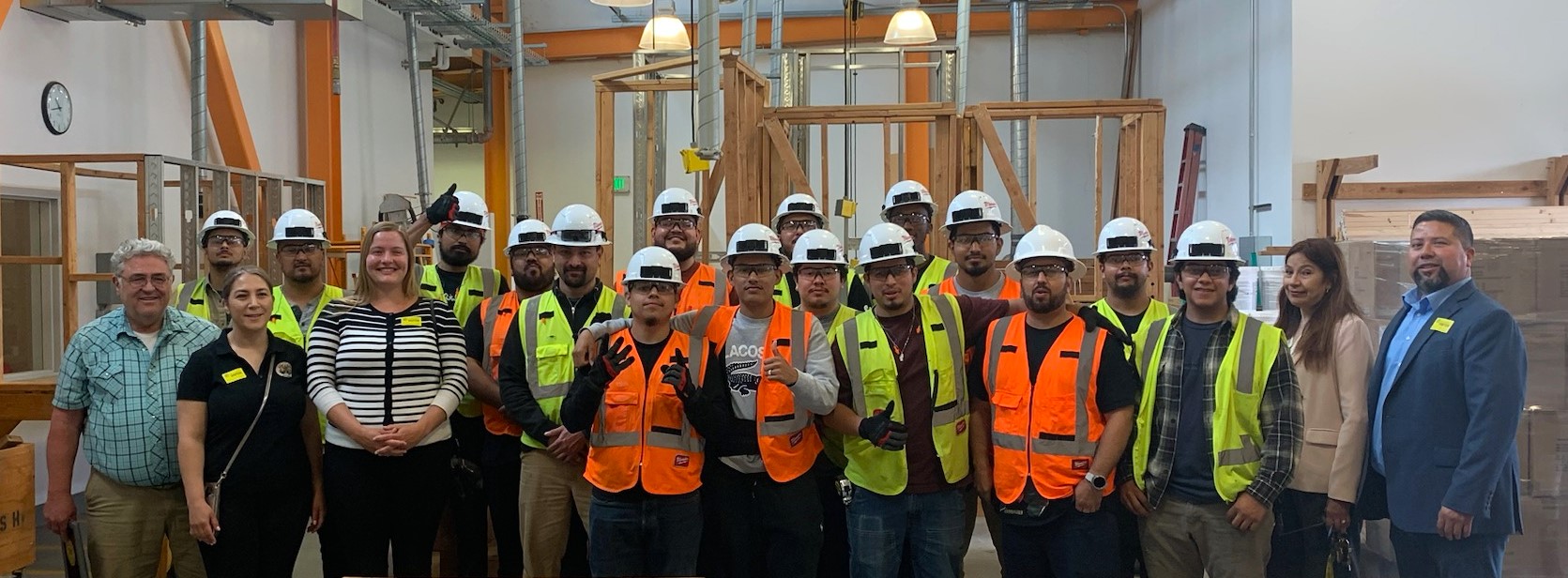
Construction Pre-Apprenticeship
Healthcare Training
Solar Installation Training
Creative Economy Training
Culinary Training
Become a Partner
Are you a workforce development organization, training provider, employer, or community organization interested in partnering with LA County to develop high road training programs?
DEO periodically releases Requests for Proposals (RFPs) to onboard new training providers and expand HRTP programs. Sign up for our newsletter to learn about future solicitations, funding opportunities, and award cycles.
What is a High Road Training Partnership?
LA County’s HRTPs are modeled on the State of California’s Framework and Essential Elements. In LA County, HRTPs bring together workers, employers, labor, educators, and community service organizations to design training for good jobs that pay well and offer clear paths to advancement. By aligning training with real employer needs and centering equity and worker voice, participants gain in-demand skills and access to stable careers. This collaborative approach strengthens businesses while building more inclusive, resilient local and regional economies.
CA HRTP Framework
HRTPs work when these three components come together:
Equity
Building economic opportunity and mobility for those who have been marginalized, disadvantaged, and/or denied opportunity.
Climate
Mitigating and supporting adaptation to climate change; increasing environmental sustainability; building community and economic resilience.
Jobs
Engaging with the State's high road employers to increase quality jobs and design skills answers to their shared needs.
CA HRTP Essential Elements
HRTPs are industry-based, worker-focused training partnerships that build skills for California’s high road employers. Four interrelated elements essential to operating as a successful HRTP:
Industry Led Problem Solving
Training partnerships are driven by real industry challenges, ensuring solutions address actual workforce needs.
The Partnership Itself is a Priority
Building and sustaining strong, collaborative relationships between all stakeholders is central to success.
Incorporate Worker Wisdom
Worker voice and lived experience are embedded throughout partnership efforts and decision-making.
Industry-Driven Education & Training
Training programs are designed around real employer needs, delivering relevant skills that lead to quality careers.
LA County’s HRTP Fund
To create and expand HRTPs in LA County, DEO launched the new HRTP Fund in April of 2025 with over $17 million available to fund innovative, high-quality workforce training models delivered by worker-centered organizations and employers.
This Fund was open to workforce development organizations, training providers and educational institutions, social service providers, and worker organizations, developing or expanding worker and industry-informed training programs that serve LA County individuals most impacted by the COVID-19 pandemic and racial and economic inequities.
The HRTP Fund attracted over 100 highly competitive applications. Twenty HRTP programs were awarded with anticipated enrollment exceeding 1,800 workers.
- Center for Employment Opportunities (CEO)
- Fernandeño Tataviam Band of Mission Indians (FTBMI)
- GRID Alternatives
- Hospitality Training Academy (HTA)
- LA/OC Building & Construction Trades Council Apprenticeship Readiness Fund
- Los Angeles Community College District (LACCD)
- Los Angeles Urban League
- Loyola Marymount University
- New Earth
- Per Scholas
- Pilipino Workers Center of Southern California
- Prestige Career College
- Propel America
- REDF
- Rio Hondo College
- The Get Focused Stay Focused Nonprofit
- The SoLa Foundation
- Western States Council of SMART
- White Hall Arts Academy Foundation
- Worldwide Starship Foundation
The programs open doors to real job opportunities by offering free, hands-on skills training shaped by industry needs and centered on workers. Training programs focus on high-demand fields and occupations for which employers are actively hiring. Participants receive supportive services and are connected to quality jobs with pathways to long-term careers.
Press and Media
LA County HRTPs in the Press and Media
Building Pathways into LA’s Top Industries through High Road Training Partnerships
DEO Awards $1 Million to Launch Digital Navigators Program
LA County DEO Announces the High Road Training Partnership Fund, a $17 Million Grant Program for Job Training Programs and Partners
LA County Department of Economic Opportunity Expands BRIC Foundation’s Arts, Media, & Entertainment High Road℠ Training Partnership With $1.5M Investment to Reach New Low-Income, COVID-Impacted Communities
LA County Invests $26.3 million in High Road Training Partnerships for Regional Recovery and Mobility
Stay Updated on New Opportunities
Partners and job seekers interested in programs or future HRTP Fund announcements, including future award cycles, may check back and are also encouraged to sign up for DEO social’s @econoppla and newsletter.